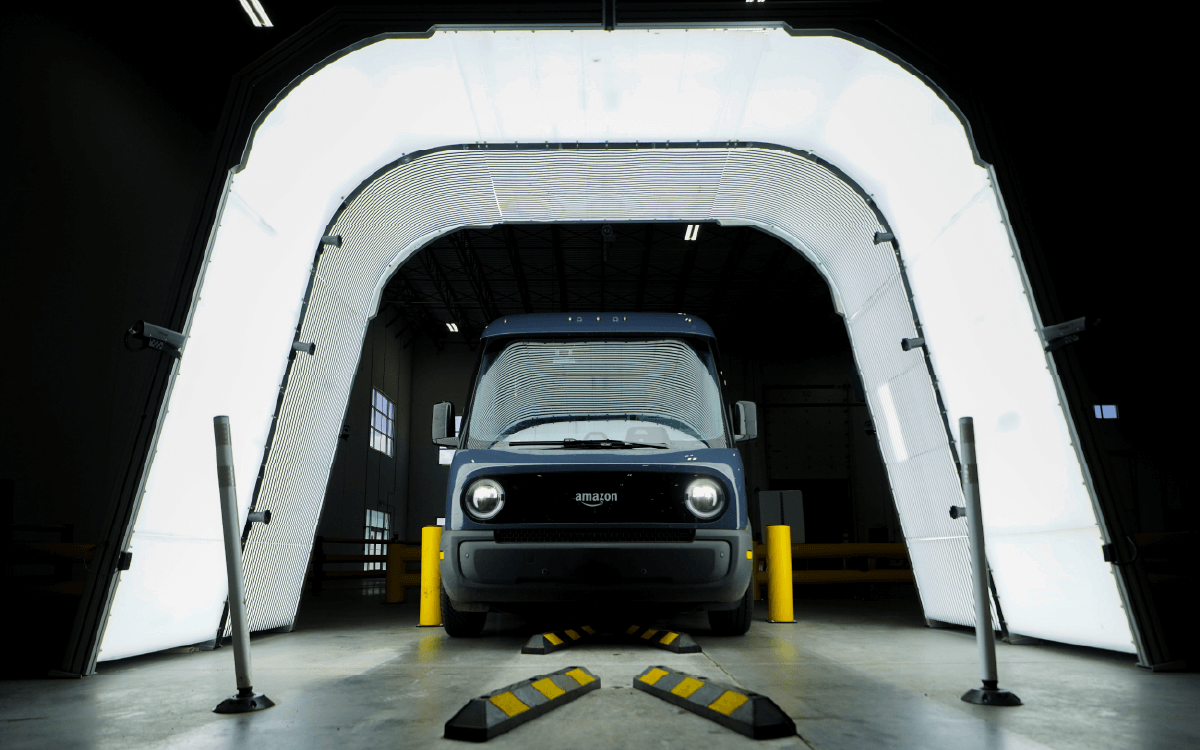
Managing vehicle logistics gateways at high-volume ports has traditionally relied on slow, manual inspections. For Original Equipment Manufacturers (OEMs), vehicles moving across ship, rail, or truck transit legs are highly exposed to transit-induced defects. Clipboard checks leave OEMs vulnerable to costly damage disputes and repair rework. Additionally, they create brand friction before a vehicle ever reaches the retail network.
Automotive logistics are entering a digital transformation. By weaving AI-powered drive-through inspection portals directly into inbound logistics, manufacturers can achieve a faster, objective, and transparent vehicle intake pipeline.
Raising the Port Quality Bar: The JLR Success Story
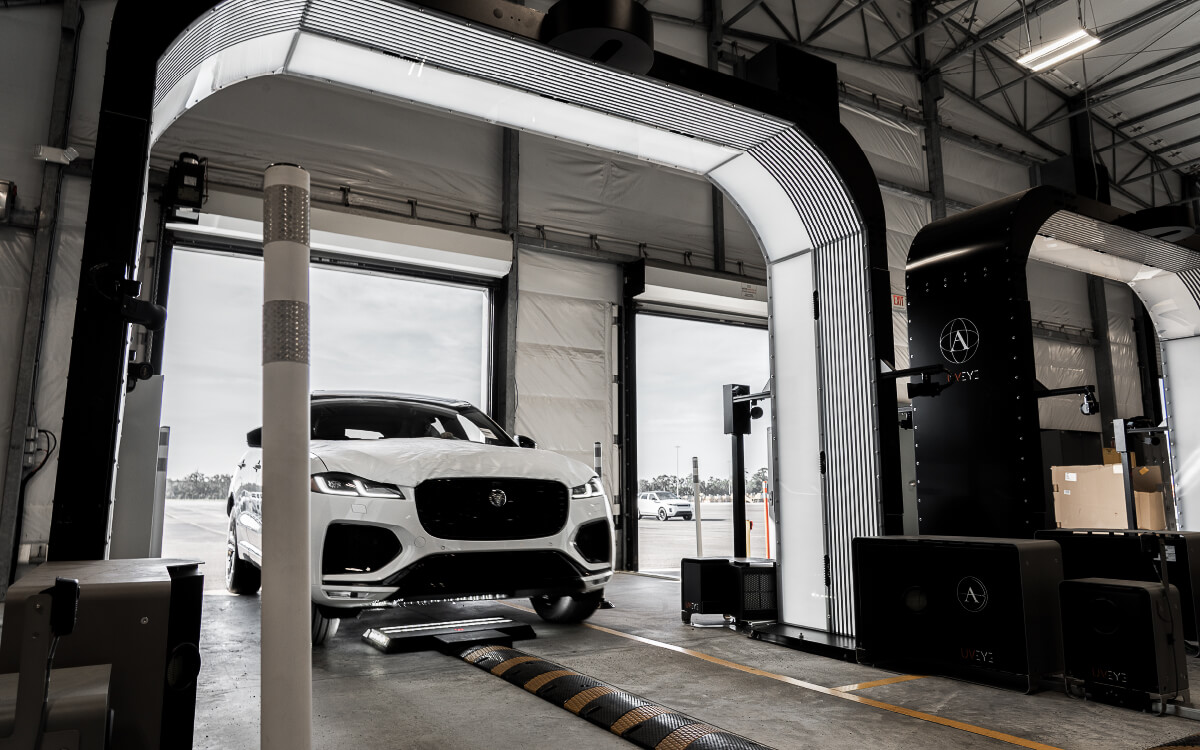
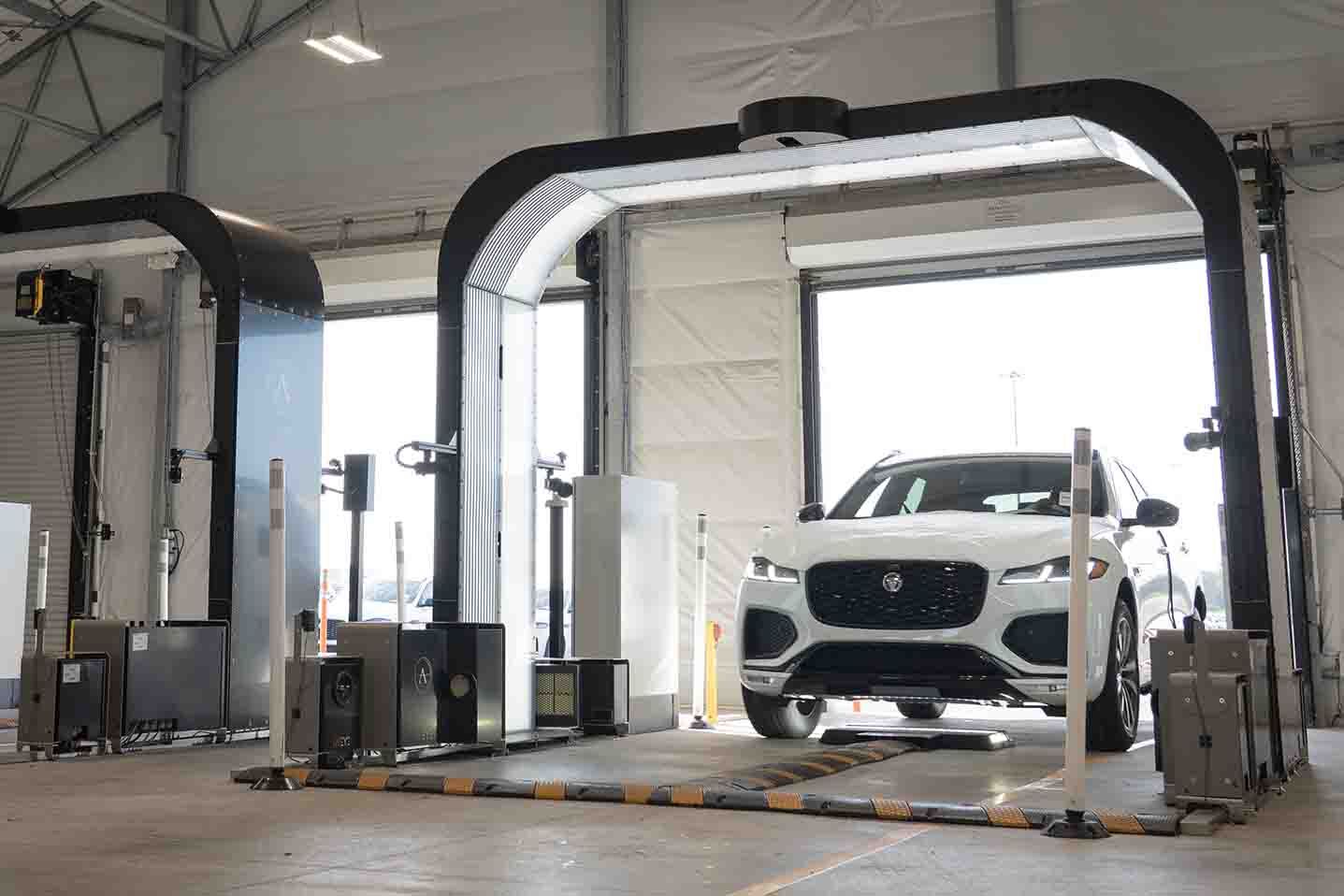
Jaguar Land Rover (JLR) USA raised the bar for vehicle logistics by becoming the first automaker in the country to fully automate port inspections. In partnership with UVeye, high-precision automated systems are now active across three major U.S. entry points. These include Brunswick, Georgia; Baltimore, Maryland; and Port Hueneme, California.
By integrating this AI-driven technology into its Customer Acceptance Line (CAL) process, JLR adds speed, precision, and complete transparency to its finished vehicle supply chain.
Speed, Traceability, and High-Precision Analytics
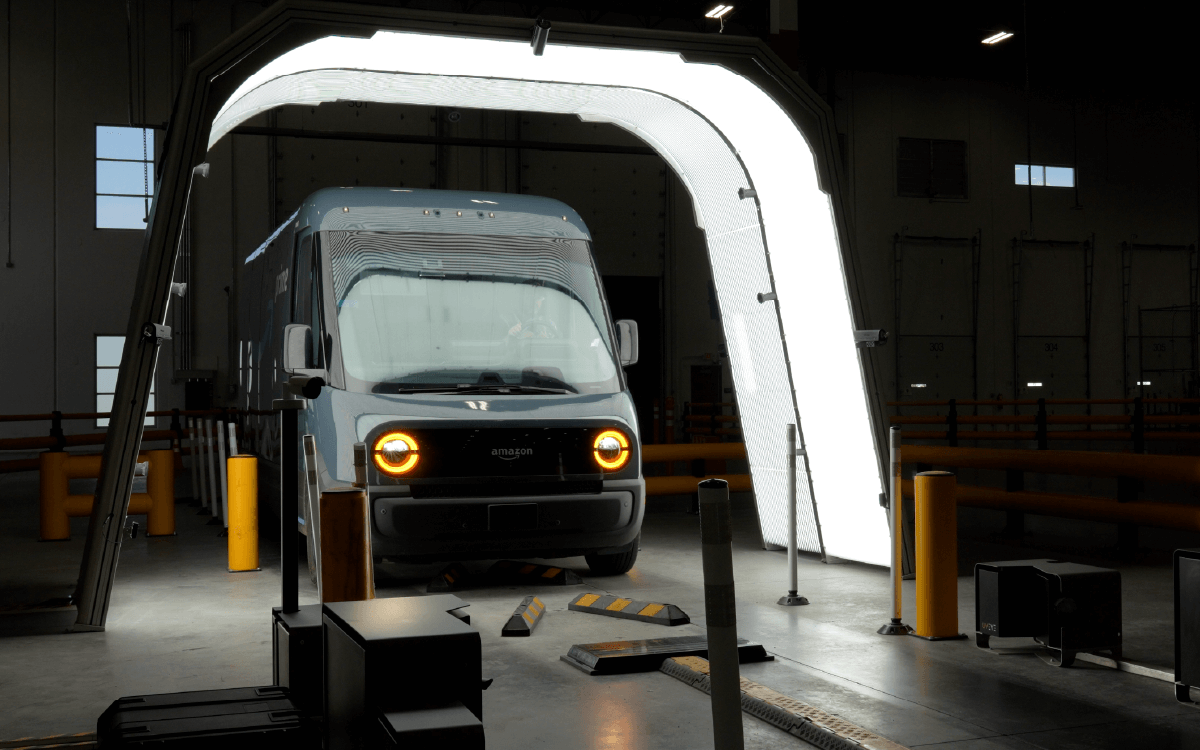
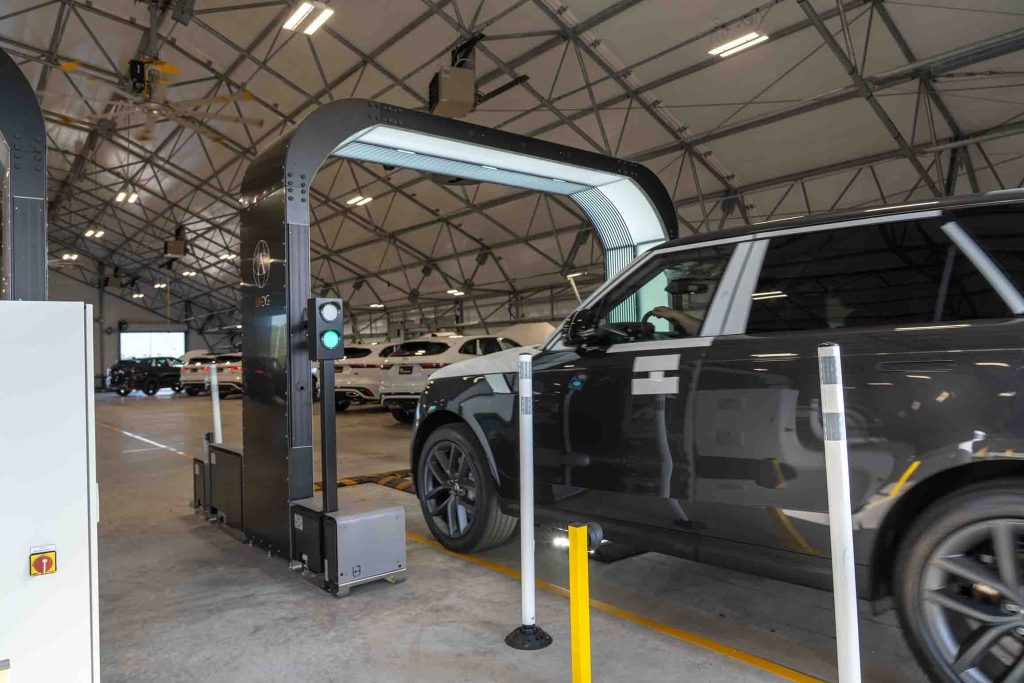
The moment a vehicle rolls off a vessel and drives straight through the portal, UVeye’s computer vision suite scans the exterior, roof, underbody, and tires in one pass:
- Unparalleled Precision: In just seconds, the AI system captures high-resolution imagery and advanced light reflection data to detect damage as small as 20 millimeters – including subtle shallow dents, paint scuffs, underbody fluid leaks, and tire anomalies missed by human inspectors.
- 90% Faster PDI Cycle: Automated VIN matching and touch-free scanning slash manual inspection time by up to 90%, boosting port throughput without slowing down high-volume processing lines.
- A Single Source of Truth: Results flow in real-time to a secure cloud platform, generating an instant, time-stamped digital condition report linked to each vehicle.
Eliminating Disputes and Protecting Brand Reputation
The ultimate goal of automated inbound quality control is complete damage attribution. By establishing a clear visual timeline at the port, JLR can compare vehicle conditions to pre-shipping manufacturing data. This pinpoints exactly whether an issue occurred at the factory, during maritime transit, or during port handling.
Documented transparency eliminates finger-pointing and results in a 100% drop in liability and policy spend disputes between OEMs, logistics providers, and carriers. More importantly, it surfaces chronic issues early. This allows on-site repairs to be scheduled so that only flawless, showroom-ready vehicles hit the dealer lot.
By pushing precise inspections further upstream, OEMs are future-proofing logistics with a network-wide standard of trust. This approach protects brand reputation from ship to showroom.
Conclusion
This documented transparency builds a single source of truth that protects brand reputation from ship to showroom. Ultimately, pushing these high-precision analytics upstream allows on-site repairs to be scheduled. As a result, only pristine, flawless vehicles hit the dealer lot.